The Complete 12-Week Vegetarian
Meal Plan for Weight Loss
With weekly menus, grocery lists, and 200+ recipes. Works whether you currently eat meat or not.
Most people approach vegetarian eating backwards. They remove meat, add a salad, and wonder why they are hungry by 10am with no energy by 3pm. The problem is never the food. It is always the structure.
A properly structured 12-week vegetarian meal plan for weight loss is not about what you remove from your diet. It is about what you put in its place, and in what combination and sequence. Get that right, and the weight loss happens as a natural consequence of eating well.
This guide covers everything: what a real 12-week vegetarian system looks like, why 12 weeks is the right timeframe, what to eat in each phase, and what the research actually says. If you want the full plan with every week mapped out, you can get instant access here.
- Why 12 weeks and not 4 or 6
- Who this works for, including meat-eaters
- The 3 phases of the plan
- How the weekly plan is structured
- The protein question, answered properly
- What happens in your body during 12 weeks
- The most important week is Week 2
- What the complete system includes
- Frequently asked questions
Why 12 Weeks and Not 4, Not 6, Not Forever
There is nothing magic about the number 12. But there is something very specific about what happens to your body and your habits over a 12-week period on a structured vegetarian plan, and it is worth understanding before you start.
Weeks 1 and 2 are adjustment. Your gut microbiome is shifting, your body is learning to extract more from plant-based foods, and your energy will feel unpredictable. This is normal and has nothing to do with the plan failing.
Weeks 3 and 4 are where the change becomes visible. Energy stabilises. Most people report sleeping better. The scale starts moving. Weeks 5 through 8 are the core of the plan, where consistent structured eating creates measurable results. Weeks 9 through 12 are consolidation, where the eating pattern has become habit rather than deliberate effort.
Who This Works For, Including Meat-Eaters
One of the most common misconceptions about a vegetarian meal plan for weight loss is that it is only for people who are already vegetarian. It is not.
Some of the most dramatic results come from people who currently eat meat and switch to a structured vegetarian system for 12 weeks. When you remove meat and processed foods simultaneously, your calorie intake drops significantly without counting a single calorie. Plant foods are naturally lower in calories but higher in fibre, so you eat enough volume to feel full while being in a natural deficit.
The plan works for:
- People who currently eat meat and want to lose weight without a gym
- Existing vegetarians who eat vegetarian food but are not losing weight (structure is the missing piece)
- People who have tried other diets and found them unsustainable
- Anyone who wants more plant-based food without giving up meals they enjoy
The 3 Phases of a 12-Week Vegetarian Meal Plan
A properly structured plan is not the same meal plan repeated for 12 weeks. It progresses. Each phase builds on the last, and understanding what each phase is doing helps you stay on track when it gets hard.
The goal in Phase 1 is not aggressive weight loss. It is digestive adjustment, habit formation, and building the foundation. Meals are simpler, variety is deliberately limited, and the focus is on getting your body used to plant-based eating. Most people lose 1 to 2kg. Some lose more. Some barely move the scale but report significantly less bloating and better energy. All of these are correct outcomes.
Phase 2 introduces more variety, higher protein combinations, and slightly more complex meal structures. Your gut has adjusted to the increased fibre and can handle a wider range of vegetables and legumes. This is where the meal prep habit becomes important. Spending 45 minutes on Sunday makes every weekday meal take under 20 minutes. Weight loss typically accelerates in Phase 2.
Phase 3 is about locking in everything you have built. Meals become more flexible, with more room for eating out and social situations. By Week 12, most people do not want to go back to their previous eating patterns. Not because they have been told not to, but because they genuinely feel better.
How the Weekly Plan Is Structured
Each of the 12 weeks is a standalone PDF with a complete weekly meal framework: which food groups to eat at each meal, what combinations work best together, and how to adjust portions based on your hunger level that day.
The structure is consistent enough that you build a rhythm, but varied enough week-to-week that you do not get bored. Here is how the weekly cadence is designed:
Each weekly PDF includes a complete grocery list. One shopping trip on Sunday covers the entire week. Everything on the list is available at any supermarket or kirana store. Nothing exotic, nothing that requires a specialty shop.
The weekly plan shows you what to eat at each meal across the week with portion guidance, not a rigid dish-by-dish script. If you want poha on Tuesday instead of Monday, that is fine. The framework is built around food groups and combinations, so swapping within the same category always works.
Every weekly plan includes one slightly more generous day. This is not a cheat day. It is a deliberate metabolic reset that prevents your body from adapting to a sustained deficit. It is already designed into the plan so you do not have to think about it.
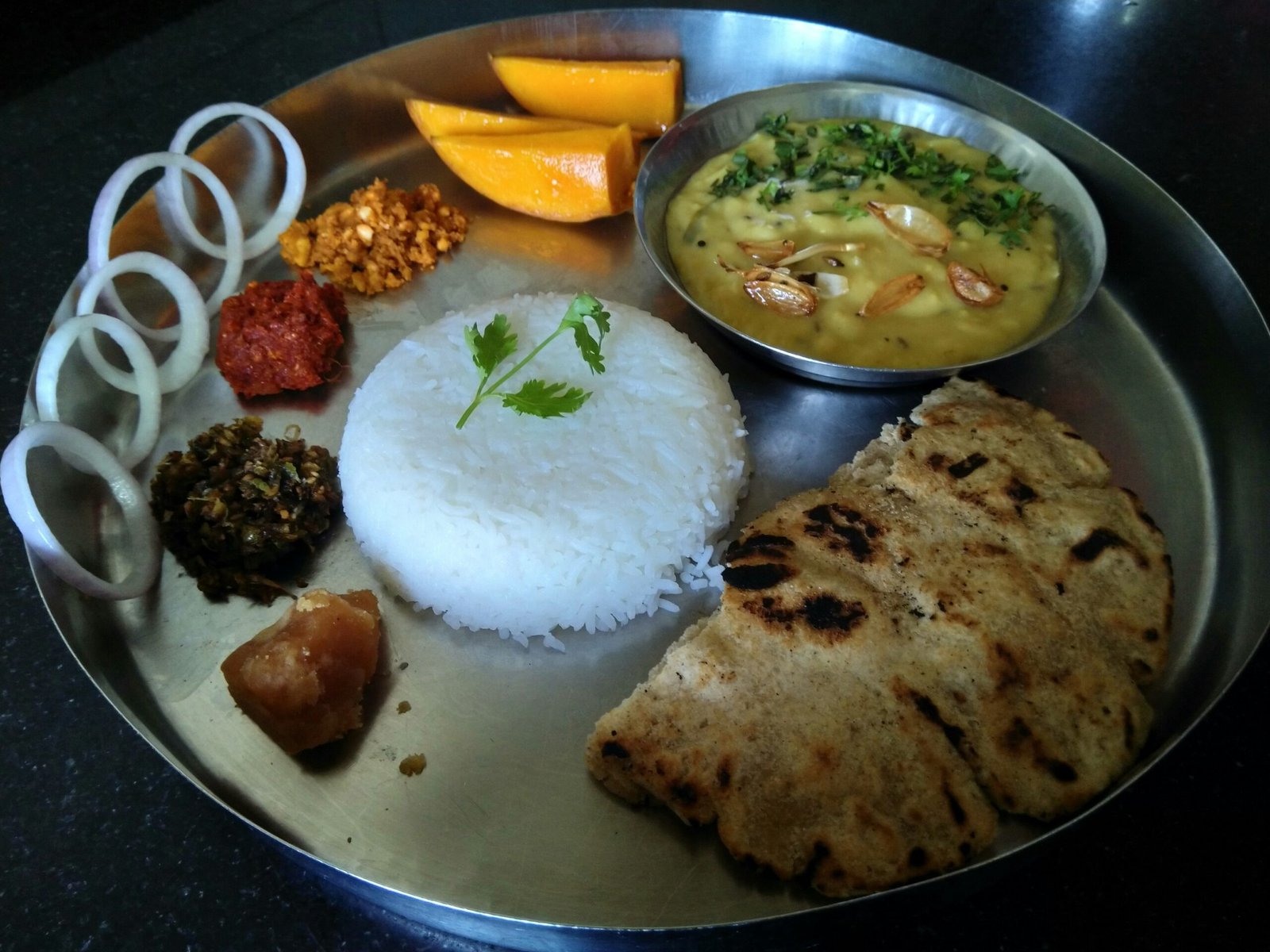
A balanced vegetarian thali covers all food groups in one meal. Every week in the plan follows this structure: dal or legume, a sabzi, a grain, curd, and a small salad.
29 PDFs, 200+ recipes, grocery lists for every week. Instant download.
Get the complete systemThe Protein Question, Answered Properly
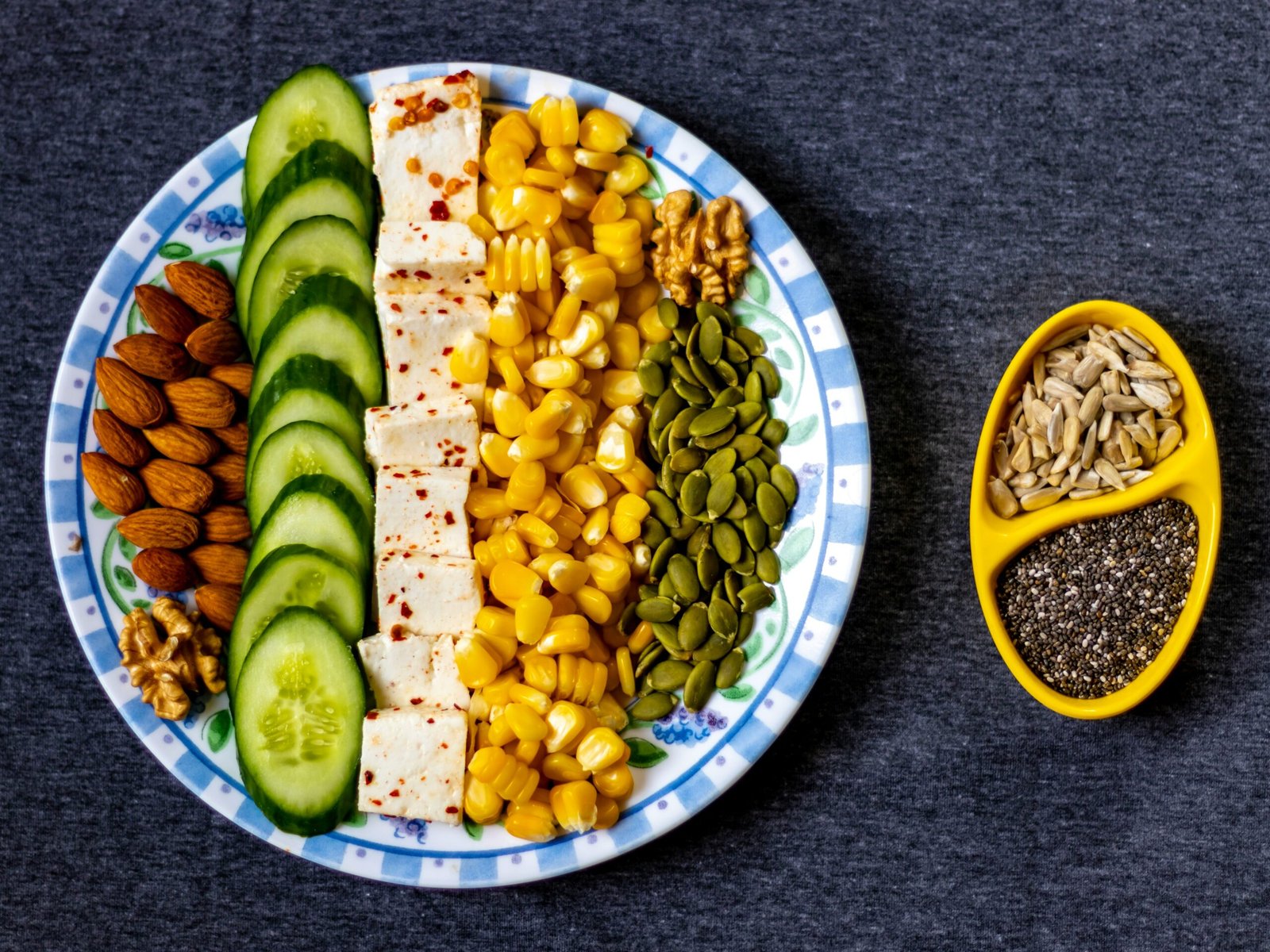
The most common concern about a vegetarian meal plan for weight loss is protein. It is a legitimate concern, especially for weight loss where maintaining muscle mass matters. Here is the full picture.
| Food | Protein per 100g | Best used as |
|---|---|---|
| Soya chunks | 52g (dry) | Curry, stir fry, pulao |
| Masoor dal | 26g (dry) | Lunch dal, soups |
| Rajma | 24g (dry) | Lunch curry |
| Chana (chickpeas) | 19g (dry) | Curry, chaat, snack |
| Paneer | 18g | Dinner sabzi, bhurji |
| Thick curd / dahi | 10g | Side, raita, snack |
| Tofu | 8g | Stir fry, bhurji |
A 70kg person aiming for weight loss needs approximately 56 to 84g of protein per day. The key is combining sources across meals. Dal at lunch, paneer or tofu at dinner, curd as a side, nuts as a snack. Done consistently, it adds up without obsessive tracking.
For a deeper breakdown: Vegetarian Protein Sources for Weight Loss, How to Hit 60g Daily.
What Happens in Your Body During 12 Weeks
Most meal plan articles skip this part. Understanding what is actually happening helps you stay on track during the weeks that feel hard.
Your gut bacteria is literally changing composition. Bacteria that thrive on plant fibre are multiplying; ones that rely on animal protein are declining. Temporary bloating or gas resolves within 10 to 14 days. It is not a food intolerance. It is adaptation.
Plant foods are high in antioxidants and phytonutrients that reduce systemic inflammation. Most people report clearer skin, better sleep, and improved joint comfort around this point. These are measurable downstream effects of reduced inflammatory load, not placebo.
Blood sugar regulation improves because the high-fibre intake slows glucose absorption. Energy becomes steadier. The afternoon crash that many people experience on a high-refined-carbohydrate diet disappears or becomes much less pronounced.
Neuroscience tells us a habit takes between 66 and 254 days to fully form. A 12-week eating plan sits right in the middle of that range. By Week 12, the pattern has been repeated enough times that it becomes the default, not the deliberate choice.
The Most Important Week Is Week 2
If there is one thing to take from this entire guide, it is this: Week 2 is not when the plan stops working. It is when most people think it has stopped working, and it is the week where the decision to continue or quit gets made.
The way to get through Week 2 is not willpower. It is structure. Having every meal already decided, already shopped for, already partly prepared. When the decision has already been made, you do not have to make it again in the moment when your motivation is lowest.
What the Complete 12-Week System Includes
- 12 Weekly Diet Plan PDFs: One for each week, every meal mapped out for every day
- 24 Recipe PDFs: Full instructions for every dish, detailed enough for someone who does not cook often
- Complete Vegetarian Nutrition Bible: How to hit protein targets, how to read food labels, the science behind the plan
- Portion Control Guide: Visual guide to portions without weighing anything
- Global Cuisine Guide: Adapting the plan when eating out or travelling
- Soup Recipes Collection: Quick, filling options for busy days
How to Start Today
- Get the complete system. Everything you need is in there, in order, one week at a time. You do not need to read all 29 PDFs before you start. Just open Week 1.
- Read Week 1 tonight. Skim the grocery list and note what you have and what you need.
- Shop tomorrow. The list is short and everything on it is available at any supermarket or kirana store.
- Start Monday. That is the whole process.
The best time to start was three months ago. The second best time is now.
Frequently Asked Questions
12 weeks of meal plans, 200+ recipes, grocery lists, nutrition guide, and more. Instant download, works on any device.
Start your 12 weeks today