Can Non‑Vegetarians Lose Weight on a Vegetarian Diet?
The answer is yes ‑ and research suggests they often lose more weight than people who were already vegetarian. Here is exactly why, and how to make the switch work.
If you currently eat meat and are considering switching to a vegetarian diet to lose weight, you are probably wondering whether it will actually work for someone like you. After all, you have built your meals around non‑vegetarian protein sources for years. Can removing that and replacing it with plant foods really produce better results?
The short answer is yes ‑ and the reasons are more interesting than most people expect. Non‑vegetarians who switch to a structured vegetarian diet consistently outperform lifelong vegetarians in weight loss studies. This article explains why, and how to make the transition work in practice.
Why Non‑Vegetarians Often Lose More Weight
When a lifelong vegetarian follows a vegetarian diet plan, they are largely eating the way they already eat ‑ with some modifications. The calorie reduction is modest because their baseline diet was already plant‑heavy.
When a meat‑eater switches to a structured vegetarian diet, something more significant happens. They simultaneously remove several of the highest‑calorie items in their diet ‑ processed meats, fried chicken, fatty cuts, fast food ‑ and replace them with whole plant foods that are naturally lower in calories but higher in volume and fibre. The result is a much larger calorie reduction, often without the person feeling like they are restricting at all.
There is also a psychological dimension. Lifelong vegetarians have often already optimised their eating habits within the constraints of a vegetarian diet. A new convert brings fresh motivation, a clean slate, and the novelty effect of an entirely new way of eating. That novelty sustains compliance, especially in the critical first four weeks.
What the Research Actually Says
Multiple large‑scale studies have examined what happens to body weight when meat‑eaters switch to plant‑based diets. The findings are consistent across different populations and different study designs.
People who switch from omnivorous to vegetarian eating patterns show meaningful reductions in body weight, BMI, and waist circumference ‑ even when they are not explicitly trying to lose weight and are not counting calories. The effect is stronger when the switch involves eliminating processed meats and fast food alongside the dietary change.
The mechanism is straightforward. Plant foods have a lower caloric density than animal products. A plate of dal and rice contains fewer calories than the same‑sized plate of chicken curry and rice, even when both plates feel equally filling. Over weeks and months, this difference compounds into meaningful weight loss.
The Real Challenges of Switching
The research is encouraging, but the transition from omnivore to vegetarian eating is not without real challenges. Understanding these in advance is the difference between a switch that sticks and one that collapses by week three.
Protein anxiety
The most common concern among meat‑eaters switching to vegetarian eating is protein. This is a legitimate concern ‑ not because vegetarian diets are inherently low in protein, but because most people do not know which plant foods are high in protein and how to build meals around them. The solution is learning the short list of high‑protein plant foods and making sure at least one appears at every meal.
Satiety in the first two weeks
The first two weeks of any dietary transition involve an adjustment period. Meat‑eaters switching to vegetarian eating sometimes find that plant‑based meals do not feel as filling initially ‑ particularly at dinner, where a large protein portion has traditionally been the anchor of the meal. This resolves once the person learns to build plant‑based meals with adequate protein and fibre, but it can cause early dropout if not anticipated.
Social and family pressure
Eating habits are deeply social. Switching from omnivore to vegetarian eating affects not just what you eat but how you navigate restaurants, family meals, and social events. Having a clear and flexible approach to these situations ‑ rather than a rigid all‑or‑nothing rule ‑ is essential for long‑term success.
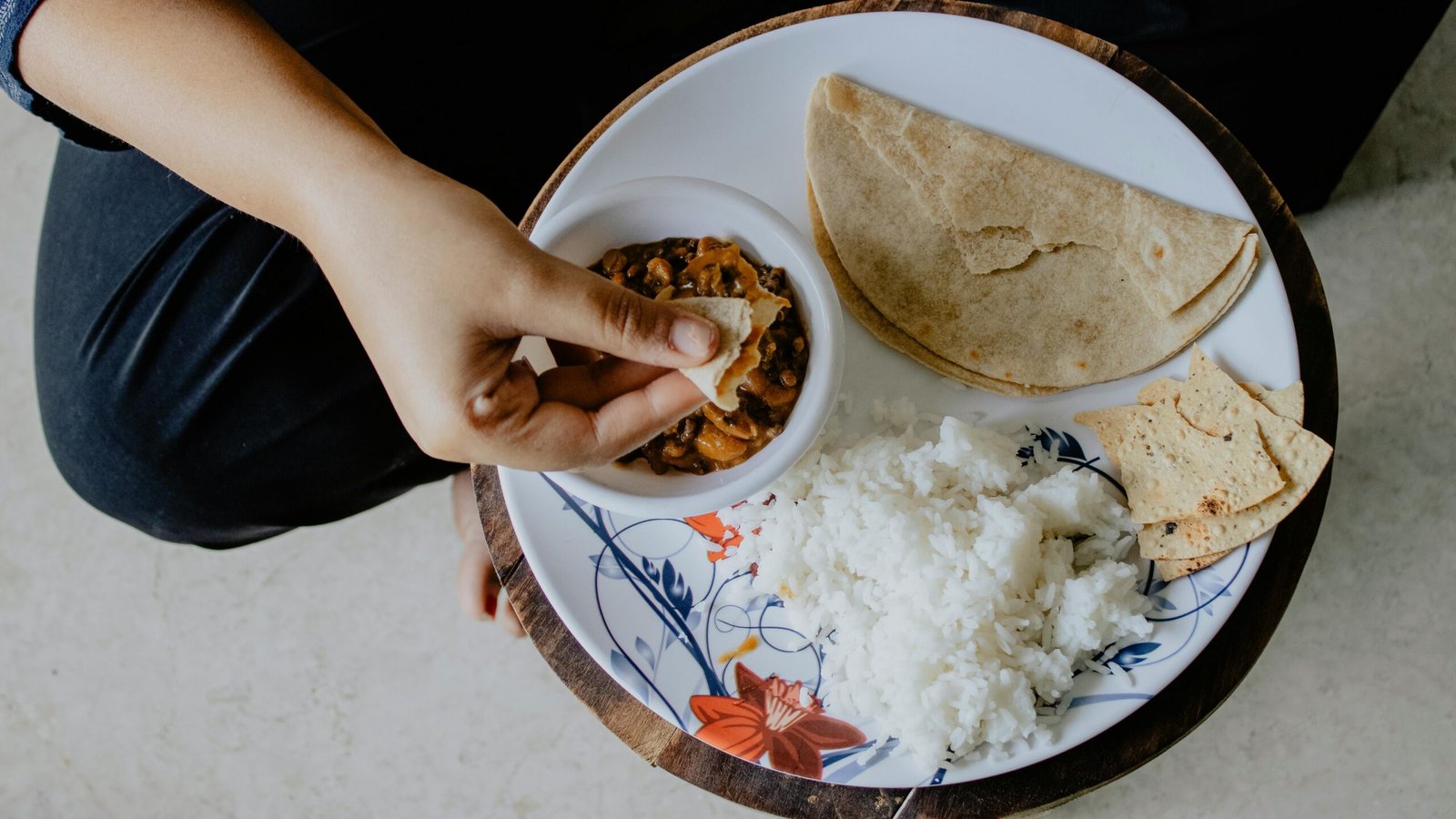
Dal, roti and rice ‑ a complete vegetarian meal that satisfies as well as any meat‑based dish.
The Veg12Week system is built for people making exactly this transition ‑ 12 weeks of structured meals, recipes, and grocery lists. No guesswork.
Get the Complete 12‑Week PlanHow to Make the Switch Work
The most effective approach for a meat‑eater switching to vegetarian eating is a structured transition rather than an overnight overhaul. Going cold turkey on all animal products simultaneously increases the difficulty without improving results. A phased approach produces better compliance and better outcomes.
- Start with two fully vegetarian days per week in the first week. This builds familiarity with plant‑based meal structures without triggering the resistance that comes from complete restriction.
- Replace one meat‑based meal per day with a vegetarian alternative in week two. Focus on getting the protein right at this meal ‑ dal, paneer, rajma, or soya ‑ so the meal feels complete.
- Move to fully vegetarian eating from week three onwards, with the meal patterns and protein sources already familiar from the previous two weeks.
- Follow a structured plan for the remaining weeks so that meal decisions are made in advance rather than improvised daily. The 12‑week vegetarian meal plan is designed for exactly this purpose.
The key insight is that the first two weeks of a vegetarian diet are the hardest ‑ not because the food is less satisfying, but because the habits are unfamiliar. Once a person has a working repertoire of ten to fifteen vegetarian meals they enjoy and know how to make, the diet becomes self‑sustaining.
What to Eat Instead of Meat
This is the practical question most people need answered before they can commit to the switch. The good news is that the list of effective meat replacements is short, affordable, and available in every supermarket.
- Dal and lentils ‑ the single most important protein source in a vegetarian diet. Moong, masoor, chana, and toor dal each provide 12 to 15g of protein per cooked cup, alongside significant fibre.
- Rajma and chickpeas ‑ legumes that closely replicate the satiety of meat‑based meals. A bowl of rajma with roti or rice is as filling as most chicken dishes.
- Paneer ‑ the most direct protein‑for‑protein swap for meat in Indian cooking. Use it two to three times per week to anchor dinner meals.
- Soya chunks ‑ the highest plant protein per serving available in most Indian kitchens. 50g dry weight delivers 25g of protein and adapts to almost any curry or stir‑fry preparation.
- Curd and buttermilk ‑ easy daily protein additions that also support gut health and digestion during the dietary transition.
The Indian vegetarian diet plan for weight loss covers exactly how to use these foods across a full 12‑week meal structure, with recipes and weekly grocery lists included.
Frequently Asked Questions
12 weekly meal plans, 24 recipes, a grocery guide, and a nutrition reference ‑ everything you need to make the switch and see real results.
Get the Veg12Week System