Can You Lose Weight Eating Indian Home Food? Yes, Here Is How
Dal, sabzi, roti, rice ‑ the food your family has eaten for generations is not the reason you are not losing weight. Here is what actually needs to change.
The most common reason Indian adults struggle to lose weight on a diet is that every plan they try asks them to stop eating Indian home food. Salads instead of dal. Quinoa instead of rice. Protein bars instead of curd. These substitutions fail within two weeks because they require abandoning the food culture, cooking habits, and family meal structures built over a lifetime.
The good news is that none of this is necessary. The Indian home kitchen already contains most of the foods associated with effective weight loss. The problem is not what is being cooked. It is how much oil is used, how large the portions are, and what is happening between meals.
The Myth That Indian Food Causes Weight Gain
The belief that Indian home food is inherently fattening is not supported by nutrition science. Traditional Indian vegetarian cooking ‑ dal, sabzi prepared with minimal oil, whole wheat roti, rice in moderate portions, curd ‑ is naturally high in fibre, moderate in protein, and lower in saturated fat than the diets of most Western countries where obesity rates are higher.
What has changed is not the cuisine but the way it is prepared and consumed. The traditional Indian thali that sustained generations of healthy, lean Indians used far less oil than the modern version. Portions were smaller. Snacking was limited to seasonal fruits or roasted grains, not packaged biscuits and namkeen. The evening meal was eaten earlier and was lighter than the midday meal.
The food itself is not the problem. The modern version of how it is prepared and eaten is.
What Actually Causes Weight Gain in Indian Households
Understanding the specific causes of weight gain in Indian home cooking makes it much easier to make targeted changes without dismantling the entire food culture.
Excess cooking oil
This is the single largest contributor to excess calories in Indian home cooking. Traditional recipes call for half a teaspoon to one teaspoon of oil per serving. Modern home cooking routinely uses three to four teaspoons ‑ sometimes more for richer dishes. One extra teaspoon of oil per meal adds approximately 45 kcal. Across three meals per day and seven days per week, that is over 900 extra calories per week from oil alone ‑ equivalent to roughly 130g of fat stored.
Invisible snack calories
The biscuits with morning chai. The handful of chakki or namkeen at 4pm. The small piece of mithai after a meal. These items are rarely counted as part of the diet because they feel incidental rather than intentional. But a standard Indian snacking pattern adds 300 to 500 kcal per day beyond the three main meals ‑ enough to completely offset the deficit created by eating well at mealtimes.
Portion sizes that have grown over time
A standard Indian roti has grown significantly in size over recent decades. What was once a CD‑sized roti is now frequently a dinner‑plate‑sized one. The same applies to rice portions and dal servings. When the food itself is healthy but the portions are double what they need to be, weight loss becomes impossible regardless of food quality.
Late and heavy evening meals
Urban Indian households typically eat the evening meal between 9pm and 10pm. Eating a large meal this late reduces the body’s ability to process glucose efficiently overnight, increases fat storage, and disrupts sleep quality ‑ which in turn affects hunger hormones the following day. Moving the evening meal earlier and making it lighter than the midday meal is one of the most impactful changes an Indian household can make for weight loss.
What to Change Without Changing the Food
The following changes apply directly to how Indian home food is prepared and consumed. None of them require changing the cuisine, buying unfamiliar ingredients, or cooking separate meals from the rest of the family.
- Reduce oil to one teaspoon per person per meal. Use a measuring spoon rather than pouring from the bottle. This single change typically removes 200 to 300 kcal per day without affecting the taste of the food meaningfully.
- Eat vegetables before roti and rice. Starting each meal with the sabzi and salad fills part of the stomach with high‑fibre, low‑calorie food before the grain arrives. This naturally reduces how much roti or rice is consumed without requiring any deliberate portion restriction.
- Size roti to a CD, not a dinner plate. A CD‑sized roti (approximately 15cm diameter) made from whole wheat atta contains roughly 70 kcal. A dinner‑plate‑sized roti contains 140 to 160 kcal. Two smaller rotis feel like a full meal and deliver the same satisfaction as one large one.
- Replace packaged snacks with whole food alternatives. Roasted chana, a small fruit, or a handful of peanuts replaces biscuits and namkeen with options that are lower in calories, higher in protein, and more filling.
- Move the evening meal to before 8pm where possible. Even shifting from 9:30pm to 8pm produces measurable improvements in overnight glucose processing and next‑day hunger levels.
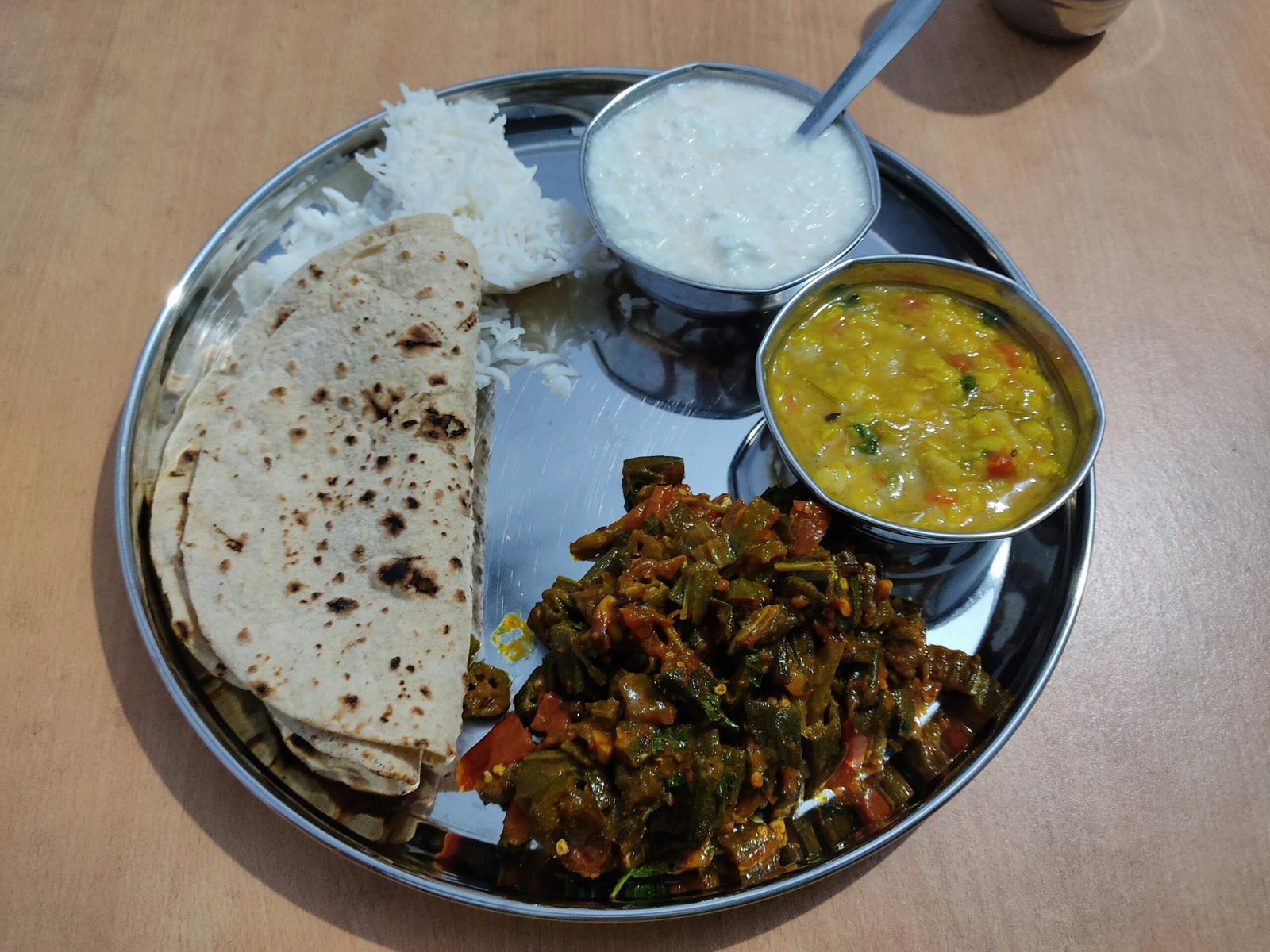
The Indian home kitchen already has everything needed for weight loss. What changes is how the food is prepared and portioned, not what is cooked.
The Veg12Week Indian diet plan works with the food your family already cooks ‑ no separate meals, no exotic ingredients, no disruption to your kitchen.
Get the Indian Vegetarian Diet PlanIndian Home Foods That Actively Support Weight Loss
Several everyday Indian foods are not just compatible with weight loss ‑ they actively support it through their nutritional properties.
- Dal in all its forms. Every variety of dal ‑ moong, masoor, chana, toor, urad ‑ is high in protein and fibre, keeps you full for hours, and has a low glycaemic index that prevents blood sugar spikes. Eating a full bowl of dal at both main meals is one of the most effective single habits for weight loss in an Indian context.
- Curd and buttermilk. Low‑fat curd is high in protein, supports gut health, and reduces overall hunger when consumed with meals. A bowl of curd at the midday meal is one of the most underrated weight loss tools in the Indian kitchen.
- Lauki, bhindi, tinda, and turai. These low‑calorie sabzi vegetables are the volume foods of Indian cooking. A large bowl of lauki sabzi cooked with minimal oil contains fewer than 100 kcal but fills the plate and the stomach. Eating more of these and less of the grain component of each meal is the simplest plate composition change available.
- Jeera, haldi, and methi. These everyday Indian spices have documented effects on digestion, blood sugar regulation, and inflammation. Using them generously in cooking adds flavour without calories and supports the metabolic environment for weight loss.
- Whole wheat roti over maida. Switching from maida‑based bread, puri, or naan to whole wheat roti increases fibre content significantly and slows the digestion of the meal, producing a more sustained energy release and less hunger before the next meal.
What to Reduce Without Eliminating
Effective weight loss in an Indian household does not require eliminating any food group. It requires reducing specific items to appropriate quantities and frequency.
Rice: Rice is not the enemy. Half a cup of cooked rice at one meal, eaten alongside a full bowl of dal and a large sabzi, is entirely compatible with weight loss. The issue is two cups of rice at both main meals with minimal protein or vegetables alongside.
Ghee: A small amount of ghee on roti or dal ‑ half a teaspoon ‑ improves flavour, helps absorb fat‑soluble vitamins, and satisfies the meal. The issue is ghee used in large quantities across all cooking. Keeping it to a finishing drizzle rather than a cooking medium is the right balance.
Mithai and sweets: Occasional mithai at festivals and celebrations is not a weight loss problem. Daily mithai after a meal is. Reducing frequency rather than eliminating entirely preserves the cultural enjoyment without the calorie accumulation.
The complete Indian vegetarian diet plan for weight loss applies all of these principles across a structured 12‑week framework built specifically for Indian households ‑ without asking you to change what you cook or eat differently from your family.
Frequently Asked Questions
A complete structured plan built around Indian home food ‑ 12 weeks, all meals planned, recipes included, grocery guide for every week.
Get the Veg12Week System