How to Lose Weight Eating Dal Chawal ‑ The Portion Guide
Dal chawal is not the reason you are not losing weight. The portions are. Here is the exact breakdown that makes India’s most eaten meal a weight loss tool.
Dal chawal is the most widely eaten meal in India. It is also one of the most misunderstood foods in the context of weight loss. Most people who are trying to lose weight either avoid it entirely ‑ replacing it with salads that they cannot sustain ‑ or eat it in the same quantities they always have and wonder why the scale is not moving.
Both approaches are wrong. Dal chawal does not need to be avoided. It needs to be portioned correctly ‑ and when it is, it becomes one of the most effective meals for sustained weight loss available in the Indian kitchen.
Why Dal Chawal Is Actually Good for Weight Loss
Dal and rice together form one of the most nutritionally complete combinations in the Indian diet. Dal provides protein and fibre. Rice provides complex carbohydrates and energy. Together they produce a moderate blood sugar response ‑ slower than rice alone ‑ and keep hunger controlled for two to three hours after eating.
Dal specifically is one of the highest‑fibre, highest‑protein foods in the Indian vegetarian diet. A full cup of cooked dal delivers 13 to 15g of protein and 10 to 12g of fibre ‑ a combination that produces strong satiety and stable blood sugar for hours. The problem is never with the dal. It is almost always with the rice portion that accompanies it.
Where Dal Chawal Goes Wrong
The standard dal chawal serving in most Indian households has shifted significantly from what it was a generation ago. Three specific changes have made this otherwise healthy meal calorie‑dense enough to prevent weight loss.
The rice portion has grown
A weight‑loss‑appropriate portion of cooked rice is half a cup to three quarters of a cup ‑ approximately 150g to 200g cooked weight. Most Indian households serve one and a half to two full cups of rice with a meal ‑ three to four times the appropriate portion. This single issue accounts for the majority of excess calories in a dal chawal meal.
The dal portion is too small
Paradoxically, while rice portions have grown, dal portions have shrunk. A small katori of dal ‑ the standard serving in many households ‑ contains only 6 to 8g of protein. A full cup of dal delivers 13 to 15g. The difference matters because the protein in dal is what controls hunger after the meal. When the dal portion is small and the rice portion is large, the meal produces a larger blood sugar spike and shorter satiety window than the same meal with the proportions reversed.
No vegetable component
Traditional dal chawal was rarely eaten alone. It was accompanied by a sabzi, a salad, or at minimum a raw onion and some pickle. This vegetable component added fibre, bulk, and micronutrients while reducing the total proportion of rice on the plate. Modern dal chawal is often eaten without any vegetable accompaniment ‑ amplifying the glycaemic effect of the meal and reducing its satiety duration.
The Right Portions for Weight Loss
The table below shows the weight‑loss‑appropriate portions for a dal chawal meal and compares them with typical household servings. The calorie difference is significant.
| Component | Typical Serving | Weight Loss Portion | Calorie Difference |
|---|---|---|---|
| Cooked rice | 1.5 to 2 cups (300‑400g) | Half cup (100g) | Saves 200 to 300 kcal |
| Dal (any variety) | Small katori (100g) | Full cup (200g) | Adds 100 kcal, 7g more protein |
| Sabzi or salad | Often absent | 1 large bowl (200g) | Adds 40 to 80 kcal, significant fibre |
| Ghee or oil | 1 to 2 tsp on rice or dal | Half tsp maximum | Saves 40 to 80 kcal |
| Total meal | Approx. 700 to 900 kcal | Approx. 420 to 480 kcal | Net saving: 250 to 450 kcal |
The Order You Eat Matters
Research on meal composition consistently shows that the order in which food is consumed within a meal affects the blood sugar response and satiety duration of that meal. For dal chawal specifically, eating order makes a meaningful practical difference.
Starting with the sabzi or salad ‑ eating the vegetable component first ‑ fills part of the stomach with high‑fibre, low‑calorie food before the grain and protein arrive. This reduces the total amount of rice consumed at the meal without any deliberate restriction. Most people eat 20 to 30 percent less rice when they eat the salad first compared to eating everything simultaneously.
After the vegetables, eating the dal before the rice further slows the digestion of the carbohydrates that follow. The protein and fibre in the dal create a digestive environment that moderates the blood sugar impact of the rice significantly more than if the rice were eaten first.
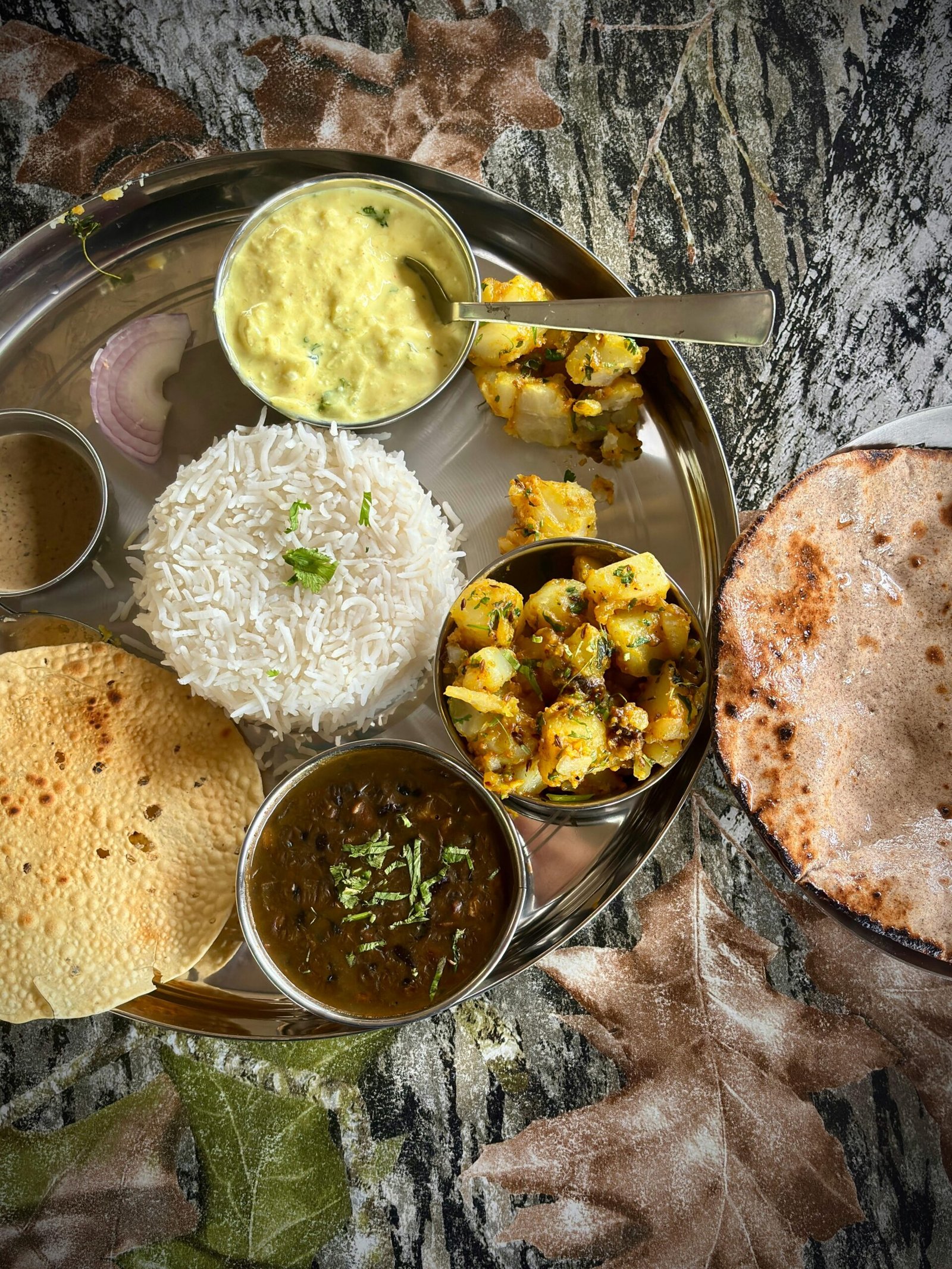
The correctly portioned dal chawal meal ‑ more dal, less rice, always with a vegetable component alongside.
The Veg12Week Indian diet plan builds correct portions into every weekly plan ‑ no measuring, no calculating, just follow the structure.
Get the Indian Vegetarian Diet PlanMaking Dal Chawal Work Harder for Weight Loss
Beyond correct portions and eating order, three specific adjustments make dal chawal more effective for weight loss without changing what it fundamentally is.
Use jowar or millet alternatives occasionally
Replacing white rice with jowar roti, bajra roti, or a small portion of cooked millets two to three times per week increases fibre content significantly and produces a lower glycaemic response. These are not permanent replacements ‑ dal chawal with white rice remains a valid and healthy meal when portioned correctly ‑ but occasional substitution adds variety and nutritional range across the week.
Add a protein booster to the dal
Most basic dal preparations use a single lentil variety. Adding a handful of cooked chana, rajma, or moong to the dal increases protein content without changing the fundamental character of the dish. A dal with mixed legumes delivers 18 to 20g of protein per cup versus 13 to 15g from a single‑lentil dal.
Always include a raw element
A simple kachumber ‑ diced cucumber, tomato, and onion with lemon and salt ‑ takes two minutes to prepare and adds significant fibre and micronutrients to the meal. It also increases meal volume without meaningful calories, which extends satiety and reduces the temptation to refill the rice portion.
The complete Indian vegetarian diet plan for weight loss applies these principles across a structured 12‑week framework ‑ with dal chawal appearing regularly throughout the plan, correctly portioned and accompanied by appropriate vegetable components each time.
Frequently Asked Questions
12 weeks of Indian meals with correct portions built in ‑ dal chawal, sabzi, roti and more, all structured for steady weight loss without restriction.
Get the Veg12Week System