Indian Vegetarian Diet Plan for Weight Loss ‑ Complete 12‑Week Guide
A structured, practical guide built around the Indian kitchen. Real foods, real results ‑ dal, sabzi, roti and all.
If you have spent years eating dal, sabzi, roti and rice ‑ and still struggled to lose weight ‑ you are not alone, and you are not doing something wrong. The Indian vegetarian diet plan for weight loss is not about giving up the foods you love. The structure is what needs to change.
Most Indian diet plans either ask you to eliminate staples or hand you a generic low‑calorie chart with no context for how Indian home cooking actually works. Neither approach lasts past week two. This guide is different ‑ it is built entirely around the Indian kitchen, the ingredients you already have, and the meals your family already eats.
- Why the Indian Diet Is Ideal for Weight Loss
- What Goes Wrong With Most Indian Diet Plans
- The Science Behind Indian Vegetarian Weight Loss
- The 3-Phase Framework: How 12 Weeks Is Structured
- A Sample Week of Indian Vegetarian Eating
- Getting Enough Protein Without Meat
- Best Indian Foods for Weight Loss
- What to Limit (Without Giving It All Up)
- The Full 12-Week Plan
- Frequently Asked Questions
Why the Indian Diet Is Ideal for Weight Loss
Traditional Indian vegetarian cooking is, by nature, one of the most weight-loss-friendly cuisines in the world. It is high in fibre, moderate in protein, rich in micronutrients, and built around whole foods. The problem is not the cuisine ‑ it is the modern version of it.
Dal, rajma, chana, lentils, and legumes are dense sources of plant protein and resistant starch. Vegetables cooked in a small amount of oil with whole spices are low in calories and high in satiety. Rice and roti, eaten in appropriate portions alongside high-fibre vegetables and protein, produce a slow blood sugar response ‑ not a spike.
The Indian vegetarian diet scores particularly well on satiety. High-fibre foods like dal, vegetables, and whole grains take longer to digest, keep you fuller for longer, and reduce overall calorie intake without the hunger that accompanies conventional dieting.
The issue most Indian households face is not the food itself but patterns that have crept into modern Indian eating:
- Portion sizes have grown, especially for rice and roti
- Oil quantities in cooking have increased significantly from traditional amounts
- Packaged snacks, biscuits, and namkeen have replaced fruit and nuts between meals
- Late dinners have become the norm, especially in urban households
- The vegetable-to-carbohydrate ratio on the plate has flipped
What Goes Wrong With Most Indian Diet Plans
Most Indian diet plans for weight loss fail for one of three reasons: they are too restrictive to sustain, they ignore how Indian households actually function, or they hand you a plan designed for a different cuisine with Indian food names pasted over it.
The restriction trap
Plans that ban rice, eliminate roti, or tell you to skip chai are setting you up to fail. These are not just foods ‑ they are deeply embedded in Indian daily life, family routines, and cultural practice. Any plan that requires you to isolate yourself from normal Indian family meals will collapse within days for most people.
The protein gap problem
The most common nutritional issue in Indian vegetarian diets is inadequate protein. Many people eat enough carbohydrates and fat but significantly under-consume protein ‑ which is essential for preserving muscle mass during weight loss and for maintaining satiety throughout the day.
The snacking problem
The average Indian household contains an abundance of high-calorie snack foods ‑ biscuits, chakki, namkeen, chips, and mithai ‑ that are consumed mindlessly between meals. These snacks are often not counted as part of a diet because they feel incidental, but they represent hundreds of extra calories daily.
The Science Behind Indian Vegetarian Weight Loss
Weight loss occurs when you consistently consume fewer calories than you burn. For sustained, healthy weight loss, the target is a daily deficit of roughly 400 to 500 calories ‑ enough to lose approximately 0.4 to 0.5 kg per week without triggering the hunger and metabolic slowdown associated with aggressive restriction.
Fibre and satiety
High-fibre foods ‑ dal, vegetables, whole grains, legumes ‑ slow digestion, delay stomach emptying, and trigger satiety hormones earlier in a meal. This means you feel full on fewer calories. The average Indian vegetarian meal, when portioned correctly, delivers 20 to 30g of fibre per day ‑ well above the levels associated with healthy weight management.
Resistant starch and blood sugar
Cooked and cooled rice and roti, eaten alongside dal and sabzi, digest more slowly than the same foods eaten in isolation. The combination of resistant starch from grains with the fibre from vegetables and the protein from dal produces a modest blood sugar response ‑ meaning less insulin, less fat storage, and longer-lasting energy.
Protein and muscle preservation
Adequate protein intake during weight loss preserves lean muscle mass, which keeps your metabolic rate stable as you lose weight. The Indian vegetarian diet has excellent protein sources ‑ paneer, curd, dal, rajma, chana, soya ‑ but they need to be deliberately included at every meal rather than left to chance.
The 3-Phase Framework: How 12 Weeks Is Structured
The complete 12-week vegetarian meal plan divides the programme into three four-week phases, each with a distinct purpose.
Establishing the food habits, correct portion sizes, meal timing, and the daily protein target. This phase removes processed snacks, corrects oil quantities, and builds the foundation for sustainable eating.
Adding variety, increasing vegetable portions, introducing strategic meal swaps, and building resistance to the social pressures that derail most diet plans by week six.
Transitioning from plan-following to intuitive healthy eating. Learning to estimate portions, navigate restaurants and celebrations, and build habits that continue well beyond week twelve.
A Sample Week of Indian Vegetarian Eating
Below is a representative sample from Week 1 of the plan ‑ an illustration of how a well-structured Indian vegetarian eating day looks in practice.
Total: approximately 1,410 kcal. For most adult women this represents a deficit of 400 to 500 kcal. For most men, add one extra roti at lunch and one additional protein serving at dinner to bring the total to approximately 1,650 kcal.
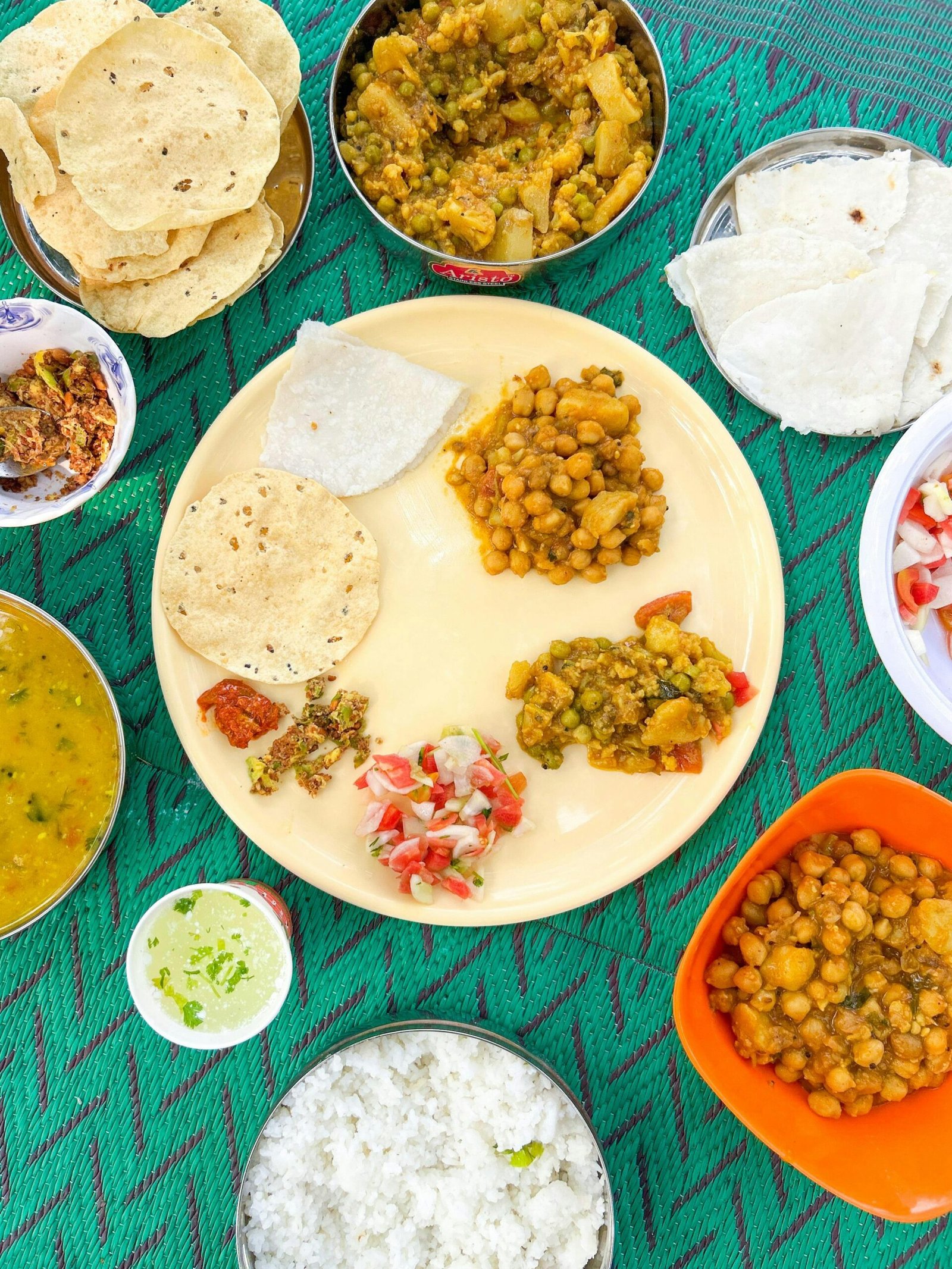
A well-portioned Indian vegetarian thali ‑ the template for every lunch in the plan.
Getting Enough Protein Without Meat
The target for weight loss is approximately 0.8 to 1g of protein per kilogram of body weight per day. For a 65 kg woman, that is 52 to 65g of protein daily. For a 75 kg man, it is 60 to 75g. These targets are achievable on a well-structured Indian vegetarian diet.
| Food | Serving | Protein | Notes |
|---|---|---|---|
| Moong dal (cooked) | 1 cup (200g) | 14g | Best digested; ideal for dinner |
| Chana dal (cooked) | 1 cup (200g) | 13g | High fibre; slow-digesting |
| Rajma (cooked) | 1 cup (200g) | 15g | Also high in iron |
| Paneer (low fat) | 100g | 18g | Use 2 to 3 times per week |
| Curd / dahi (low fat) | 150g | 8g | Include daily; aids digestion |
| Soya chunks (cooked) | 50g dry weight | 25g | Highest plant protein per serving |
| Roasted chana | 30g | 7g | Ideal evening snack |
| Besan (gram flour) | 30g | 6g | Use in chilla instead of maida |
The practical approach is to include at least one dal or legume at both lunch and dinner, add curd daily, and use paneer or soya chunks two to three times per week. This combination delivers 55 to 70g of protein daily for most people without any supplements.
Best Indian Foods for Weight Loss
Legumes and pulses
Dal, rajma, chana, moong, masoor, urad ‑ these are the backbone of any effective Indian vegetarian diet plan. They are high in protein and fibre, low in fat, and deeply satisfying. Eat at least one serving of legumes at every main meal.
Non-starchy vegetables
Lauki, tinda, turai, bhindi, palak, methi, gobhi, shimla mirch ‑ these vegetables are very low in calories and very high in volume. Filling half the plate with these at lunch and dinner is one of the single most effective interventions in this plan.
Whole grains over refined
Replacing maida with atta, white rice with small portions of brown rice or millets like jowar and bajra, and biscuits with roasted chana significantly reduces the glycaemic load of the diet without requiring any change in meal structure.
Fermented foods
Curd, buttermilk, idli, dosa, and kanji support gut health and improve the absorption of key nutrients. Including curd daily ‑ particularly at lunch ‑ is one of the easiest and most effective additions to the plan.
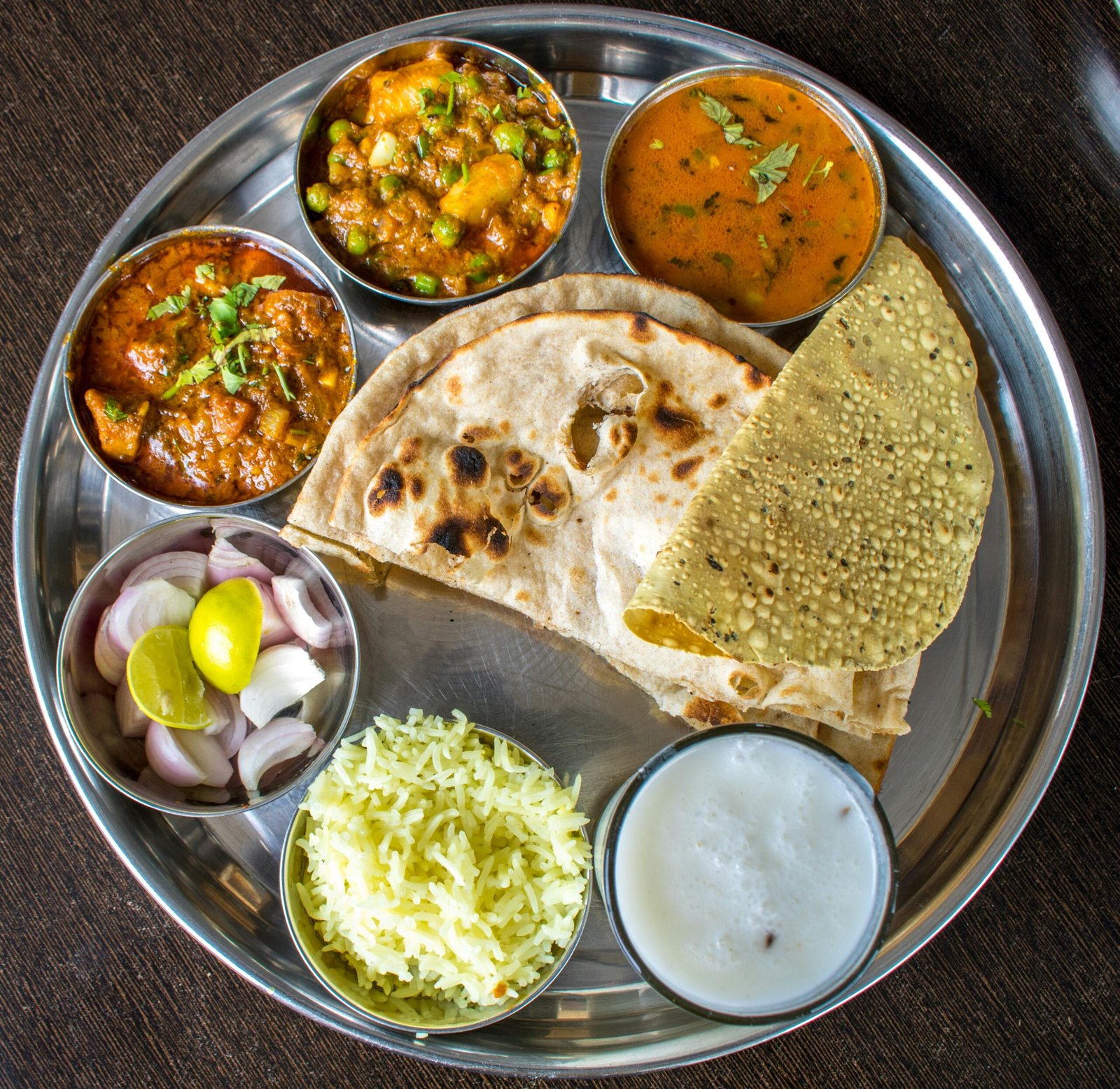
Dal, paneer, curd, and chana ‑ the protein foundations of the Indian vegetarian weight loss diet.
12 weeks of meals, recipes, and grocery lists built for the Indian kitchen ‑ all 29 PDFs, instant download.
Get the Complete SystemWhat to Limit (Without Giving It All Up)
- Cooking oil: Most Indian recipes use two to three times more oil than necessary. Reduce to one teaspoon per person per meal. This one change often accounts for 200 to 300 kcal daily.
- Processed snack foods: Biscuits, chakki, namkeen, chips, and mithai are calorie-dense and nutritionally empty. Replace with roasted chana, a small fruit, or a handful of nuts.
- Refined flour (maida): Paratha, puri, naan, and packaged breads are high-calorie, low-fibre options that spike blood sugar quickly. Limit to once or twice per week.
- Sweetened beverages: Chai with three teaspoons of sugar, sweetened lassi, packaged fruit juice, and cold drinks are liquid calories that do not contribute to satiety.
- Late-night eating: Eating dinner after 9 pm consistently reduces the body’s ability to process glucose efficiently overnight. Aim for dinner by 8 pm where possible.
The Full 12-Week Plan
Establish meal timing, correct portion sizes for roti and rice, and hit daily protein target using dal, curd, and chana. Remove packaged snacks.
Introduce paneer or soya at least twice this week. Add a protein-forward breakfast ‑ besan chilla, moong dal chilla, or dahi with fruit.
Double the vegetable portion at both lunch and dinner. Introduce one millet-based meal per week ‑ jowar roti or bajra roti replacing wheat roti.
The meal patterns from weeks 1 to 3 become habitual. Introduce the Sunday prep routine ‑ batch cooking dal, washing and chopping vegetables, and setting up the week’s grocery list.
Systematic variety across Indian cuisines ‑ South Indian breakfasts, Gujarati-style sabzis, Punjabi dals ‑ to prevent boredom and introduce new nutrient sources.
Reduce reliance on the written plan. Practice estimating portions by eye. Learn to read restaurant menus for weight-loss-friendly options.
Most people following this plan lose between 4 and 6 kg over 12 weeks. Week 1 often shows 1.5 to 2 kg loss, largely due to reduced water retention. From week 2 onwards, the rate settles to a sustainable 0.4 to 0.6 kg per week.
Frequently Asked Questions
Get all 12 weekly meal plans, 24 recipe PDFs, a grocery guide, and a nutrition reference ‑ built for the Indian vegetarian kitchen.
Get the Veg12Week System