How to Lose Weight When Your Family Does Not Diet With You
You do not need a separate diet or a separate kitchen. You need a different approach to the same food your family already eats.
The most common reason Indian women abandon a weight loss plan is not lack of motivation. It is this: they are the person who cooks for the family, and the family is not dieting. Cooking one meal for everyone and a separate meal for yourself is exhausting, expensive, and socially disruptive. Most people cannot sustain it beyond two weeks.
The assumption that losing weight requires separate food is the problem ‑ not the family. A well‑designed Indian vegetarian diet plan does not ask you to cook differently for yourself. It asks you to eat the same food differently. The distinction matters enormously in practice.
The Real Problem Is Not the Food
When someone says they cannot lose weight because they cook for the family, what they usually mean is one of three things. First, they serve everyone else before themselves and eat whatever is left over ‑ often in larger quantities and at irregular times. Second, they taste‑test while cooking and count this as incidental rather than real eating. Third, they feel obligated to finish what is left on other people’s plates rather than storing or discarding it.
None of these problems require a new diet. They require new habits around the same food.
Same Food, Different Plate
The core principle is that the food on your plate does not need to be different from the food on everyone else’s plate. What changes is the proportion of each component on your plate and the order in which you eat it.
A standard Indian family meal of dal, sabzi, roti, and rice can be a 700 kcal plate or a 450 kcal plate depending entirely on how it is assembled. The family eats the same dishes. You assemble your plate differently.
- More dal, less rice. Serve yourself a full cup of dal and half the rice you would normally take. The family’s rice pot is untouched. Nobody notices. Your plate has significantly more protein and fewer calories.
- Sabzi first, grain last. Fill half your plate with sabzi and salad before adding roti or rice. By the time the grain arrives, there is less room for it. You eat less grain without anyone noticing you restricted yourself.
- Smaller roti, more dal. Take smaller rotis instead of large ones. Roll them yourself if needed ‑ nobody is measuring. The extra roti stays in the basket for the family.
- Skip the second serving. The family may take seconds. You do not. This single habit removes 200 to 400 kcal from your intake without requiring any change to what is cooked.
Handling Family Pressure Without Conflict
In Indian households, food is love. Offering food, pressing more servings, and expressing concern when someone eats less are acts of care rather than sabotage. Understanding this makes it easier to handle without resentment or conflict.
Do not announce you are dieting
The moment you announce a diet, every meal becomes a negotiation. Family members feel rejected when their cooking is declined. They worry, they comment, they offer alternatives. Avoid this entirely by making your plate changes silently. You are not refusing food ‑ you are simply serving yourself a different amount. Nobody needs to know why.
Eat at the table with everyone
Eating separately ‑ earlier, later, or in a different room ‑ signals that you are on a different programme and invites questions and commentary. Eating at the table with the family, from the same dishes, at the same time, simply with different plate proportions, keeps mealtimes normal and removes the social friction entirely.
Respond to pressure with positivity not explanation
When someone urges you to eat more, “I am full” is the simplest and most effective response. It requires no justification and ends the conversation. Explanations about calories, portions, or weight loss goals open a discussion that rarely ends well at the dinner table.
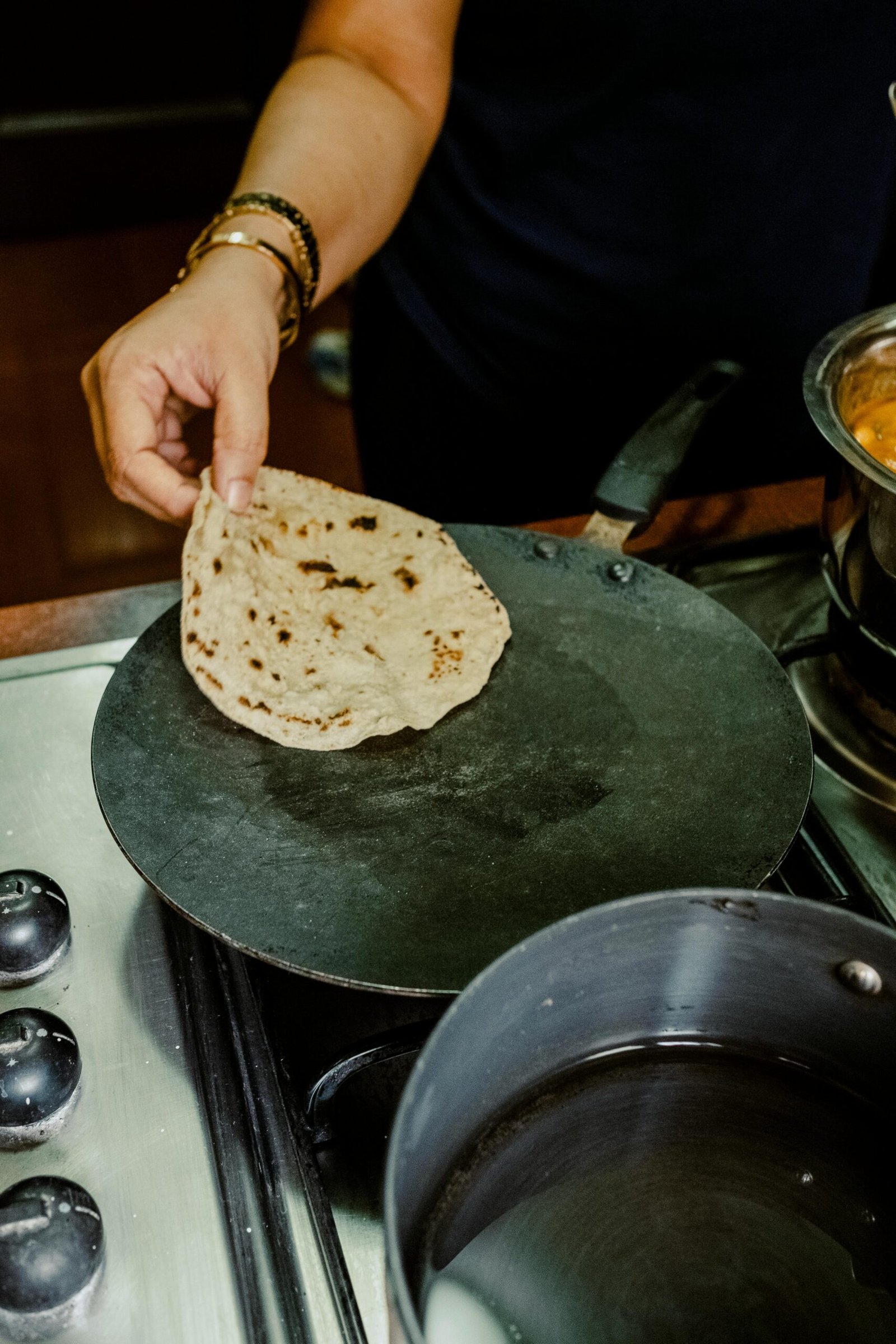
Eating the same food as the family with different plate proportions is more sustainable than any separate diet ‑ and no one needs to know.
The Veg12Week system works with whatever your family already cooks. No separate meals, no special ingredients, no disruption to the kitchen routine.
Get the Indian Vegetarian Diet PlanHow to Cook for Everyone and Eat for Yourself
Several cooking adjustments benefit your weight loss without affecting the family’s experience of the meal at all.
Reduce oil at the cooking stage
Cooking the family’s dal and sabzi with one teaspoon of oil per dish instead of three does not significantly change the taste. The family will not notice. But across two to three meals per day, this single change removes 200 to 400 kcal from your intake. Oil reduction is the highest‑impact invisible change available in an Indian kitchen.
Cook dal in larger quantities
Dal is the food that makes your weight loss plan work ‑ it is your primary protein source and hunger manager. Cooking a larger pot of dal than the family needs ensures you always have a full serving available, regardless of what else is on the table. A full cup of dal at both main meals is non‑negotiable for the plan to produce results.
Add a salad that only you eat
A simple kachumber ‑ diced cucumber, tomato, onion with lemon and salt ‑ takes two minutes and does not require cooking. It goes on your plate, not theirs. It fills half your plate with volume foods before the roti and rice arrive. The family eats what they always eat. You eat what they eat plus a kachumber that keeps your portions in check.
The Invisible Changes Nobody Needs to Notice
The following changes to your own eating habits are invisible to the family and require no change to the cooking or serving of the family meal.
- Eat your salad and sabzi before touching roti or rice. Takes 3 to 4 minutes. Reduces grain consumption by 20 to 30 percent naturally.
- Drink a full glass of water before sitting down to eat. Reduces hunger by approximately 20 percent. Invisible to everyone at the table.
- Stop eating when 80 percent full, not when the plate is empty. This requires no change to what is served or what anyone else eats.
- Do not finish the children’s leftovers. This single habit removes 100 to 300 kcal per day for most Indian mothers without any change to the family meal.
- Eat slowly and put your roti down between bites. Slowing eating pace gives satiety hormones time to register fullness before the plate is finished. Results in naturally smaller portions without conscious restriction.
The complete guide to losing weight on Indian home food covers how every element of the Indian home kitchen ‑ dal, sabzi, roti, rice, and curd ‑ can support weight loss without requiring any change to what the family eats.
Frequently Asked Questions
The Veg12Week system is designed for Indian households ‑ same food, structured portions, no separate cooking required.
Get the Veg12Week System