Vegetarian Weight Loss ‑ The Complete Science‑Backed Guide
Everything you need to know about losing weight on a vegetarian diet ‑ the science, the strategy, the common mistakes, and the structured approach that makes it sustainable.
Vegetarian weight loss is not a niche subject. Over 400 million people in India alone follow a vegetarian diet, and hundreds of millions more worldwide eat predominantly plant‑based meals. Yet the weight loss industry continues to produce advice built around high‑protein animal foods and salads that have nothing to do with how most vegetarians actually eat.
This guide covers the complete picture ‑ the science, the strategy, the protein question, the meal structure, the common mistakes, and the realistic timeline. Whether you have been vegetarian your whole life or are transitioning from a non‑vegetarian diet, the principles here apply.
Does a Vegetarian Diet Actually Work for Weight Loss?
Yes ‑ and the evidence is consistent and substantial. Multiple large‑scale studies comparing dietary patterns show that vegetarians have lower average BMI, lower rates of obesity, and better long‑term weight maintenance than comparable non‑vegetarian populations. This is not simply because vegetarians tend to be more health‑conscious across all behaviours. Studies that control for lifestyle variables still show the dietary pattern itself produces better weight outcomes.
The reason a well‑structured vegetarian diet produces reliable weight loss is not mysterious. Plant foods are fundamentally less calorie‑dense than animal products and processed foods. A diet built around vegetables, legumes, and whole grains is harder to overeat in calorie terms than a diet built around calorie‑dense animal products and processed snacks ‑ even when eating to complete satiety.
The qualification “well‑structured” matters. A poorly planned vegetarian diet ‑ high in refined carbohydrates, low in protein, with excessive oil and processed food ‑ produces weight gain just as reliably as any other poor diet. The dietary pattern is not magic. The principles that make it work must be applied.
The Science Behind Vegetarian Weight Loss
Three primary mechanisms explain why a well‑structured vegetarian diet produces weight loss without requiring explicit calorie restriction.
Calorie density
Calorie density is the number of calories per gram of food. Non‑starchy vegetables have a calorie density of 0.2 to 0.5 kcal per gram. Cooked legumes are 1 to 1.5 kcal per gram. Most processed snacks, fried foods, and calorie‑dense animal products range from 2 to 9 kcal per gram. When meals are built primarily around vegetables and legumes, a physically large and satisfying plate delivers significantly fewer calories than an equivalent‑sized plate of calorie‑dense foods.
Dietary fibre
Plant foods are the primary source of dietary fibre. Fibre slows gastric emptying, triggers the release of satiety hormones earlier in a meal, and extends the feeling of fullness for longer after eating. A high‑fibre meal produces substantially less hunger two to three hours later than a low‑fibre meal of identical calorie content. This means less eating between meals without any deliberate restriction ‑ which is how a structural calorie deficit emerges from food choices rather than from willpower.
Protein‑induced satiety
Protein is the most satiating macronutrient. It triggers the strongest hormonal satiety response, requires the most energy to digest, and preserves lean muscle mass during weight loss ‑ which maintains metabolic rate. The common assumption that vegetarians cannot get adequate protein is incorrect. The vegetarian diet contains numerous high‑protein foods. The challenge is ensuring they are present at appropriate quantities in each meal, which requires planning rather than luck.
Solving the Protein Problem
The most significant nutritional challenge in vegetarian weight loss is not getting enough protein in absolute terms ‑ it is distributing protein adequately across all meals so that each meal produces the satiety response needed to control hunger until the next one.
The target is 0.8 to 1g of protein per kg of body weight daily. A 60 kg person needs 48 to 60g. A 75 kg person needs 60 to 75g. These targets are entirely achievable from vegetarian sources.
The highest‑protein vegetarian foods
Dal and legumes are the foundation of vegetarian protein. A full cup of cooked dal delivers 13 to 15g of protein. A cup of cooked chickpeas or rajma delivers 15 to 17g. Paneer provides 18g per 100g. Low‑fat curd provides 8 to 10g per 150g serving. Soya chunks provide the highest protein density of any common vegetarian food at 52g per 100g dry weight.
The key insight is that protein needs to be present at every meal ‑ not concentrated at one. A first meal with no protein source leads to hunger that undermines the rest of the day. An evening meal with no protein source leads to late‑night hunger that disrupts sleep and the following morning’s choices. Protein distributed across all meals maintains hunger control consistently throughout the day.
For Indian vegetarians specifically
The Indian vegetarian diet already contains the highest‑protein plant foods available ‑ dal, legumes, paneer, curd. The issue is not the food culture but the quantities. A small katori of dal at meals is insufficient. A full bowl at both main meals, combined with curd and a protein‑containing snack, meets the daily target reliably.
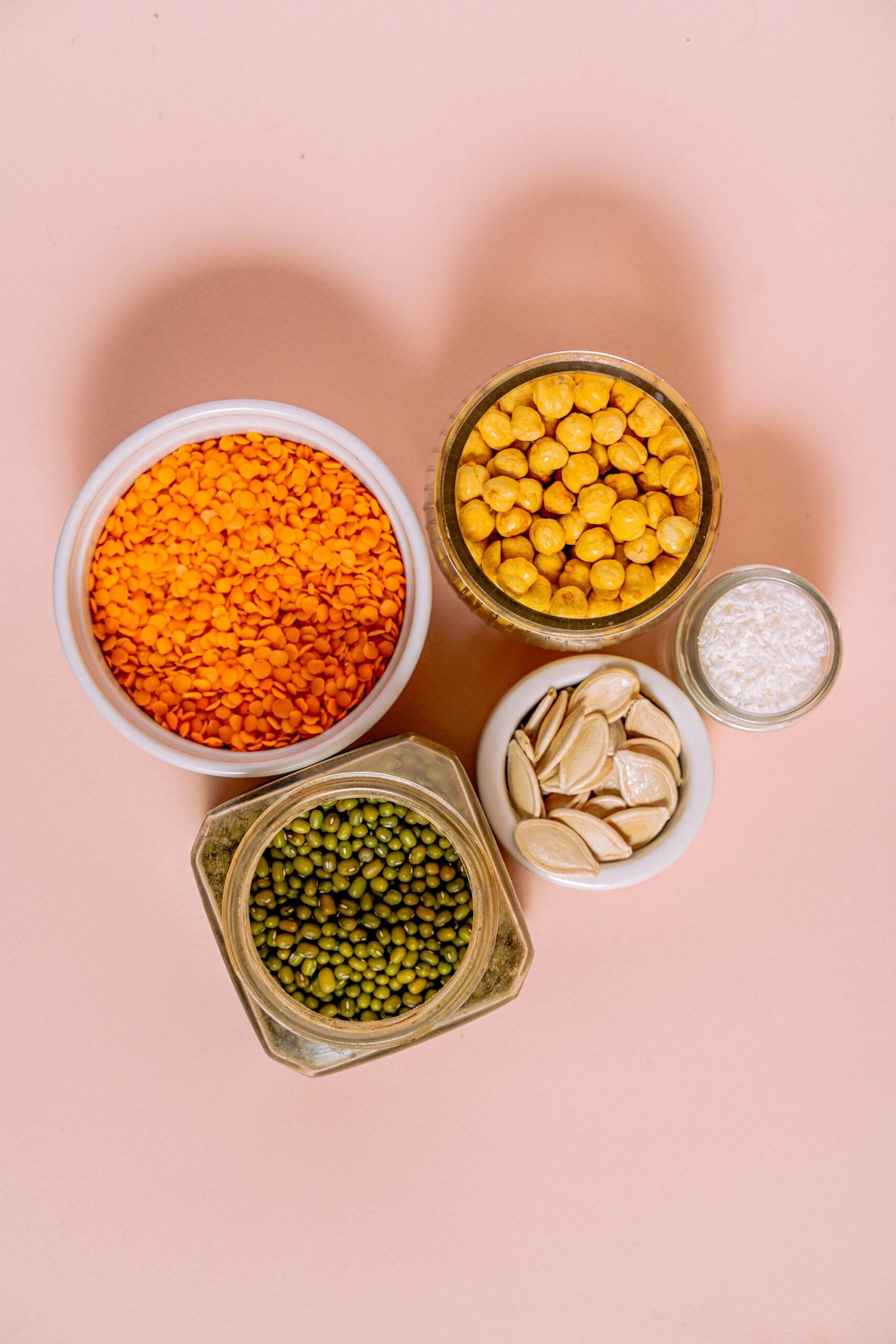
Dal and legumes are the protein foundation of every effective vegetarian weight loss plan ‑ red lentils, chickpeas, and moong dal together cover every meal.
Creating a Calorie Deficit Without Counting
Weight loss requires a calorie deficit. This is physiologically non‑negotiable. However, explicit calorie counting is not the only mechanism for creating and maintaining that deficit. For most people, it is not even the most effective one.
The four levers that create a structural calorie deficit in vegetarian eating ‑ without requiring tracking or arithmetic ‑ are food quality, protein adequacy, meal structure, and vegetable volume. When these four variables are correctly set, the deficit emerges automatically from the food choices rather than from deliberate restriction.
The plate method is the most practical implementation of these principles. Half the plate is non‑starchy vegetables. One quarter is a protein source ‑ dal, legumes, paneer, or curd. One quarter is a complex carbohydrate ‑ whole wheat roti or a moderate portion of rice. Applied consistently at every main meal, this template produces a reliable daily deficit of 300 to 500 kcal without any tracking.
The Right Meal Structure
Beyond what is eaten, when and how meals are structured significantly affects the effectiveness of a vegetarian weight loss approach. A well‑structured day includes three planned meals and one to two small snacks at consistent times. The structure prevents the unplanned grazing that accounts for a large portion of excess calorie intake in most people’s diets.
Start the day with protein
Starting the day with a protein‑containing first meal ‑ rather than a grain‑only or skipped meal ‑ sets the hormonal environment for controlled hunger throughout the morning. A first meal that delivers 12 to 18g of protein produces significantly lower mid‑morning hunger than one that delivers 3 to 5g, even at the same calorie content.
Make the midday meal the anchor
The midday meal should be the largest and most complete meal of the day. A full bowl of dal or legumes, a large portion of sabzi or salad, and a moderate grain component produces satiety for four to five hours and eliminates the afternoon energy crash that leads to heavy snacking.
Keep the evening meal lighter
The evening meal should be lighter than the midday meal. Eating a large meal late reduces the body’s ability to process glucose efficiently overnight, increases fat storage, and disrupts sleep quality. A lighter evening meal that still contains protein ‑ a bowl of dal, a small grain portion, and a vegetable component ‑ provides adequate nutrition without the metabolic costs of a heavy late meal.
The Most Common Mistakes
Understanding where vegetarian weight loss most commonly fails makes it possible to build a plan that avoids these failure points from the start.
Replacing protein with carbohydrates
The most common dietary mistake in vegetarian weight loss is not insufficient protein at an overall level but insufficient protein at individual meals. When a meal does not contain an adequate protein source, the appetite gap is filled with extra carbohydrates ‑ more roti, more rice, more bread. The calorie content of the meal stays similar or increases, but the satiety duration drops significantly. The fix is simple: ensure every meal contains a full serving of a protein‑rich food before adding the carbohydrate component.
Excess cooking oil
Oil is the highest calorie‑density food in the kitchen at 9 kcal per gram. The difference between one teaspoon of oil per meal and three teaspoons is approximately 160 kcal ‑ which compounds to over 1,100 extra calories per week from oil alone. Measuring oil rather than pouring is the single highest‑impact cooking change available to most Indian vegetarians.
Invisible snack calories
Planned snacks are part of the diet. Unplanned snacks ‑ biscuits with chai, a handful of namkeen while cooking, a small sweet after a meal ‑ are not. These items are rarely consciously counted but consistently add 200 to 500 extra calories per day. A brief honest audit of everything consumed between meals typically reveals the primary cause of stalled progress.
Abandoning the plan at week two
The most dangerous point in any vegetarian weight loss plan is weeks two and three, when the dramatic first‑week results settle to a sustainable rate that feels disappointing by comparison. Understanding that this slowdown is normal ‑ and not evidence of failure ‑ is the difference between completing twelve weeks and abandoning the plan prematurely.
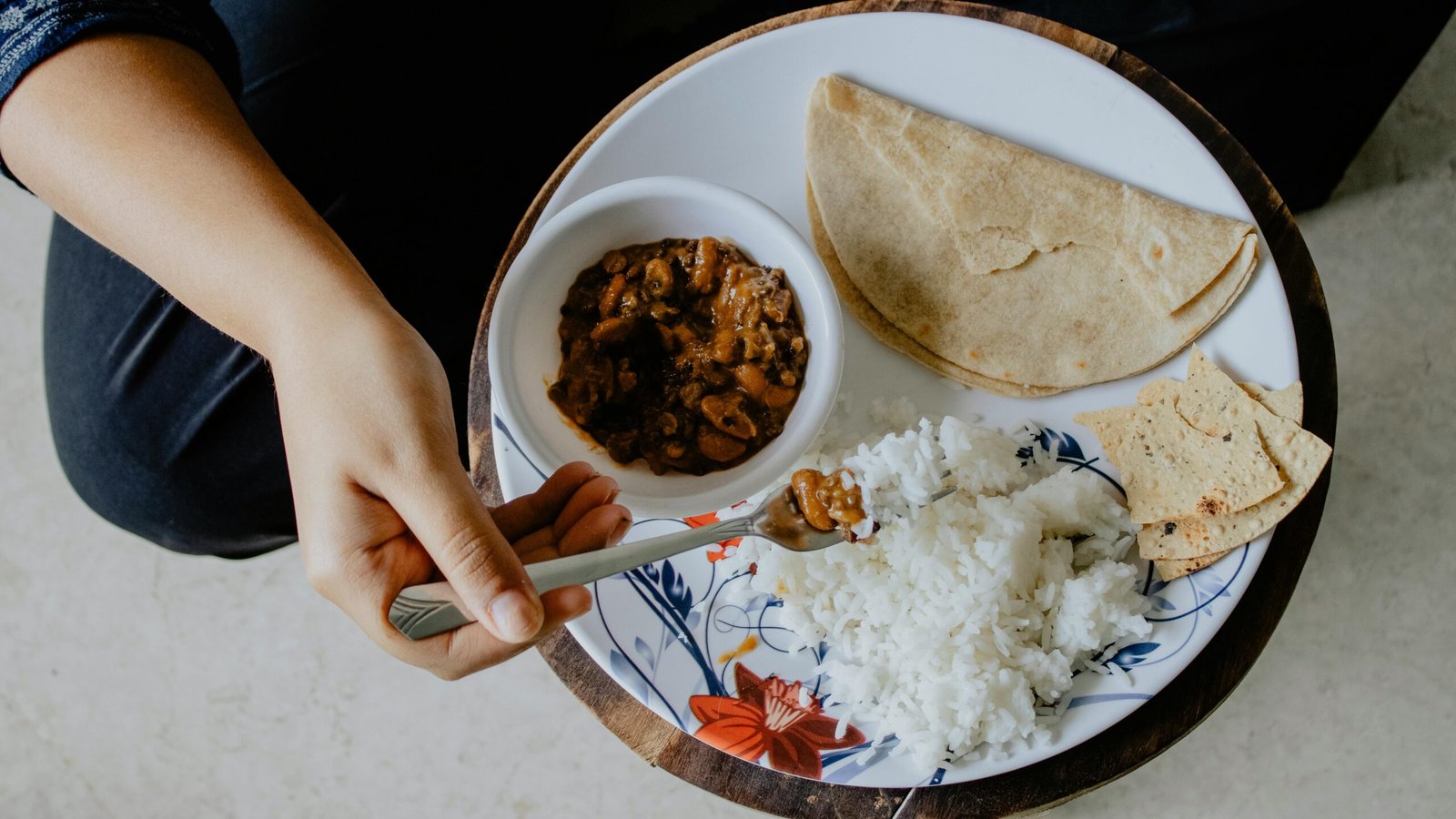
A well‑structured vegetarian plate ‑ half vegetables, a quarter protein, a quarter grain ‑ creates a natural calorie deficit without tracking.
The Veg12Week plan applies every principle in this guide across 12 structured weeks ‑ with meal plans, recipes, grocery guides, and a full nutrition reference.
Get the Complete 12‑Week PlanWhat to Expect Week by Week
Setting accurate expectations for each phase of a 12‑week vegetarian weight loss plan is one of the most important factors in completing it. Most people who abandon the plan do so because results did not match expectations ‑ not because the plan stopped working.
Week one typically produces 1 to 1.5 kg of weight loss, mostly water weight and glycogen depletion as processed foods and excess sodium are removed. From week two onwards, fat loss settles to its sustainable rate of 0.4 to 0.6 kg per week. Over 12 weeks, total expected loss is 4 to 6 kg of genuine fat, along with significant improvements in energy, digestion, and body composition that the scale does not fully capture.
The Indian Context
Indian vegetarian cooking is particularly well suited to weight loss ‑ better, in fact, than the Western salad‑and‑supplement approach that most diet advice promotes. Dal, sabzi, roti, and rice, when prepared with appropriate oil quantities and consumed in correct portions, constitute one of the most nutritionally complete and calorie‑appropriate dietary frameworks available.
The problems that prevent Indian vegetarians from losing weight are specific and correctable: excess oil in cooking, oversized rice portions, insufficient dal quantities, and invisible snack calories between meals. None of these require changing the cuisine. They require changing specific quantities and habits within the existing food culture.

Indian home food and weight loss are not in conflict ‑ the cuisine is already well suited, only the portions and preparation need adjustment.
How to Get Started
The most effective way to start a vegetarian weight loss plan is with a structured system rather than a collection of individual tips. Tips require daily decision‑making. A structure removes the decisions and lets the plan run on habit.
- Establish your protein target. Calculate 0.8 to 1g per kg of your body weight. This is the daily protein target the meal plan needs to hit. Knowing this number makes it possible to assess whether any given day’s eating is likely to produce the satiety needed to stay within a calorie deficit.
- Set up a weekly meal prep session. One 45‑minute session per week removes the daily friction that causes most diet plans to collapse. Cooked dal, prepped vegetables, and portioned snacks turn every weekday meal from a cooking project into a quick assembly task.
- Apply the plate method at every meal. Half the plate is non‑starchy vegetables. One quarter is protein. One quarter is complex carbohydrate. Apply this template consistently without tracking or measuring calories.
- Replace unplanned snacks with planned ones. Identify the snacking patterns that are adding uncounted calories and replace them with a planned, portioned alternative ‑ roasted chana, a small fruit, or a handful of peanuts at a specific time each day.
- Measure oil with a spoon. One teaspoon per person per meal. This single change removes 150 to 300 kcal per day for most Indian vegetarians without any perceptible impact on food quality.
For a complete, week‑by‑week structured plan that applies all of these principles with specific meal options, recipes, grocery guides, and a nutrition reference, the Veg12Week system provides everything needed to implement this approach without having to design the plan yourself.
Frequently Asked Questions
Every principle in this guide applied across 12 weeks ‑ meal plans, recipes, grocery guides, portion reference, and nutrition breakdown all included.
Get the Veg12Week System