The Best Vegetarian Foods for Weight Loss ‑ Ranked by Protein and Fibre
Not all vegetarian foods are equal for weight loss. This ranking cuts through the noise and shows exactly which foods deliver the most satiety per calorie.
Every list of the best vegetarian foods for weight loss tends to include the same generic items ‑ broccoli, quinoa, Greek yoghurt, and almonds. These are fine foods. They are also largely irrelevant to anyone eating a traditional Indian vegetarian diet.
This ranking is built specifically for vegetarian eating ‑ Indian and global ‑ and uses a scoring system based on the two nutritional variables that matter most for weight loss: protein content and fibre content per calorie. A food that delivers high protein and high fibre per calorie controls hunger, preserves muscle, and supports a sustained calorie deficit. That is what this list measures.
How This Ranking Works
Each food is scored on three criteria: protein per 100 kcal, fibre per 100 kcal, and calorie density (kcal per 100g). A food that scores highly on all three is a Tier 1 food ‑ it delivers maximum satiety value with minimum caloric cost. A food that scores well on two of three is Tier 2. Foods that score primarily on calorie density with moderate protein and fibre are Tier 3.
Tier 1 ‑ The Non‑Negotiables
These foods should anchor every main meal. They are the nutritional foundation of any effective vegetarian weight loss approach.
| Food | Protein per 100 kcal | Fibre per 100 kcal | Kcal per 100g | Why it ranks here |
|---|---|---|---|---|
| 1Soya Chunks | 17.3g | 3.1g | 336 kcal (dry) | Highest protein density of any vegetarian food. 50g dry delivers 26g protein. |
| 2Masoor Dal | 7.4g | 4.2g | 116 kcal (cooked) | Best protein‑fibre combination among common dals. Cooks fastest. |
| 3Chana Dal | 6.8g | 5.6g | 164 kcal (cooked) | Highest fibre dal. Produces one of the lowest glycaemic responses available. |
| 4Rajma | 6.2g | 4.6g | 127 kcal (cooked) | Resistant starch extends satiety well beyond most legumes. |
| 5Low‑Fat Paneer | 15.0g | 0g | 120 kcal (low‑fat) | Exceptional protein density for a cooked Indian food. Zero fibre offset by protein strength. |
| 6Low‑Fat Curd | 9.1g | 0g | 66 kcal | High protein, very low calorie. Probiotic benefit supports gut and hunger hormones. |
| 7Moong Dal | 6.5g | 3.9g | 105 kcal (cooked) | Most digestible dal. Ideal for evening meal. Sprouts increase bioavailability further. |
Every effective vegetarian weight loss plan is built around Tier 1 foods at its core. The complete guide to vegetarian protein sources covers how to hit 60g of daily protein using primarily these foods in practical meal combinations.
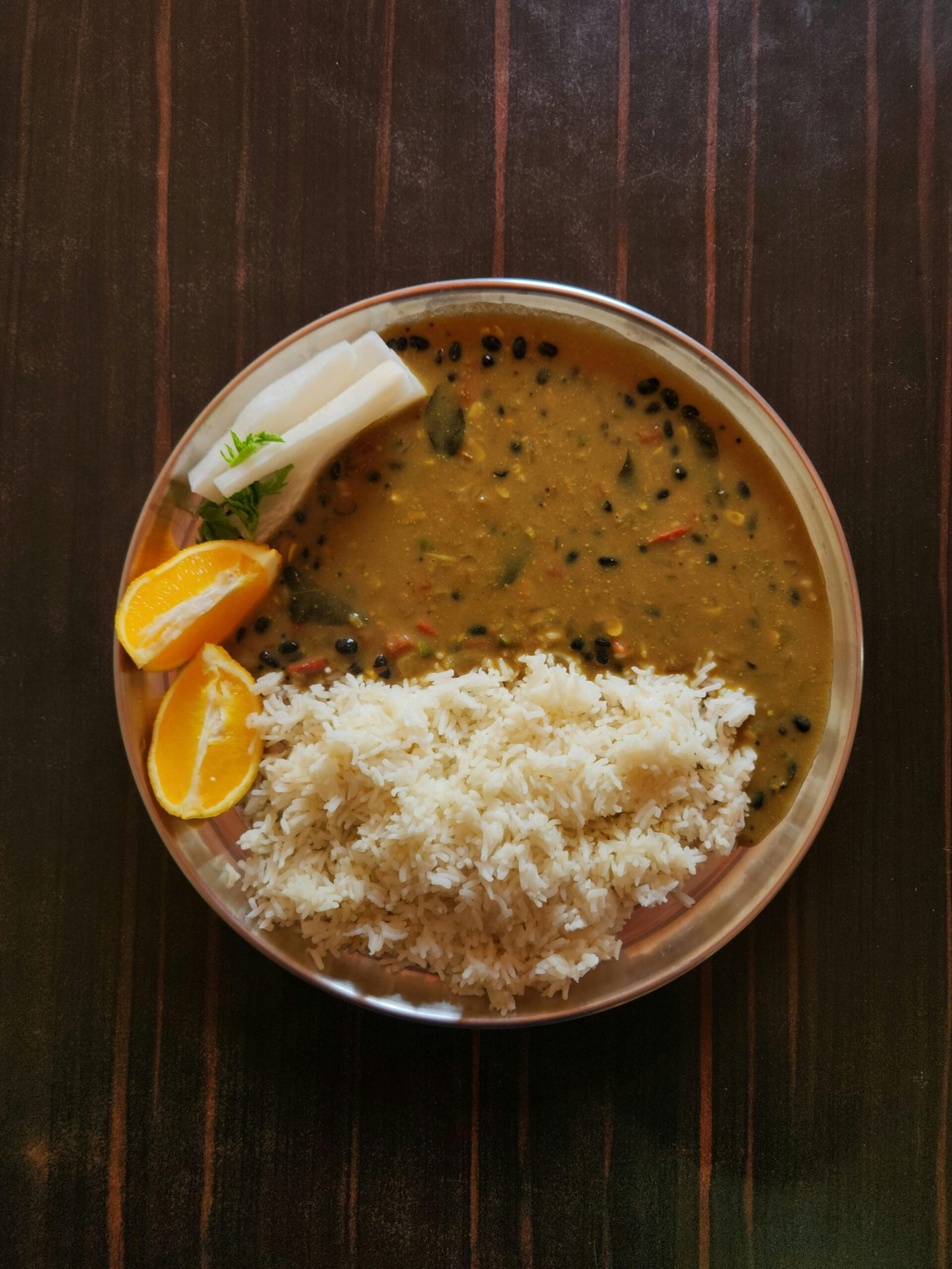
Tier 1 foods ‑ dal, legumes, paneer, and curd ‑ should anchor every main meal in a vegetarian weight loss plan.
The Veg12Week system builds every meal around Tier 1 and Tier 2 foods in the right quantities ‑ no guesswork, no tracking required.
Get the Complete 12‑Week PlanTier 2 ‑ The Strong Supporters
These foods score well on one or two of the three criteria and should be present at most meals as complements to Tier 1 foods. They cannot anchor a meal on their own but significantly improve the nutritional profile of any meal they are added to.
| Food | Protein per 100 kcal | Fibre per 100 kcal | Kcal per 100g | Best use |
|---|---|---|---|---|
| Palak (Spinach) | 12.6g | 10.0g | 23 kcal | Add to dal, use as sabzi base, palak paneer. Exceptional protein‑per‑calorie ratio. |
| Chickpeas (Chana) | 5.6g | 4.9g | 164 kcal (cooked) | Roasted as snack, chana masala at midday meal, added to dal for extra protein. |
| Moong Sprouts | 9.7g | 5.8g | 31 kcal | Raw in salads and chaat. Adds protein and crunch with negligible calories. |
| Oats | 4.4g | 5.0g | 389 kcal (dry) | Morning meal base. Beta‑glucan fibre produces strong and sustained satiety. |
| Besan (Gram Flour) | 5.6g | 5.1g | 387 kcal (dry) | Chilla batter, adding to roti dough. High protein and fibre flour alternative. |
| Dalia (Broken Wheat) | 3.5g | 5.2g | 342 kcal (dry) | Evening grain replacement for white rice. Very low glycaemic index. |
| Peanuts | 4.5g | 2.4g | 567 kcal | Snack in 25 to 30g portions. High calorie density requires portion awareness. |
Tier 3 ‑ The Volume Foods
Tier 3 foods score primarily on calorie density ‑ they are so low in calories per gram that large portions can fill the plate and the stomach with minimal caloric impact. They are not protein or fibre powerhouses, but their volume and satiety contribution is significant when used correctly.
| Food | Kcal per 100g | Primary benefit | Best use |
|---|---|---|---|
| Lauki (Bottle Gourd) | 17 kcal | Extreme volume with negligible calories | Fill half the plate. A full bowl adds under 60 kcal to any meal. |
| Tinda (Round Gourd) | 21 kcal | High water content, very low density | Sabzi base. Replaces calorie‑dense vegetables like potato at a fraction of the calories. |
| Cucumber | 16 kcal | Highest water content vegetable | Salad base at every meal. Eat as much as wanted ‑ caloric impact is negligible. |
| Tomato | 18 kcal | Lycopene, acidity slows eating pace | Salad staple, sabzi base, dal addition. |
| Bhindi (Okra) | 33 kcal | Soluble fibre slows glucose absorption | Dry bhindi sabzi. Better blood sugar response than most sabzi vegetables. |
| Gobhi (Cauliflower) | 25 kcal | Bulk and texture at very low calories | Large sabzi portion. Satisfying texture reduces the perceived need for more grain. |
| Karela (Bitter Gourd) | 17 kcal | Blood sugar lowering compounds | Regular consumption supports glucose tolerance. Best eaten 2 to 3 times per week. |
Foods to Limit During Active Weight Loss
No food needs to be permanently eliminated. However, certain foods consistently undermine vegetarian weight loss when consumed in the quantities typical of the Indian diet. Reducing these during an active weight loss phase produces measurable improvement without requiring a complete dietary overhaul.
- Potato: Glycaemic index of 78 ‑ higher than white bread. Produces a rapid blood sugar spike and fast hunger return. Limit to small quantities rather than using as a primary sabzi ingredient.
- White rice in large portions: A half cup of white rice per meal is compatible with weight loss. Two cups of rice at both main meals is not. The food itself is not the problem ‑ the portion is.
- Maida‑based items: White bread, naan, puri, and most packaged snacks use maida, which has a very high glycaemic index and minimal fibre. These produce rapid blood sugar spikes and short satiety windows.
- Packaged namkeen and biscuits: High in sodium, refined oil, and refined carbohydrates with minimal protein or fibre. The most calorie‑dense snack options with the least satiety return per calorie.
- Sweetened beverages: Chai with two teaspoons of sugar, packaged fruit juices, and cold drinks add 100 to 200 kcal per serving with zero satiety effect. Replacing these with green tea, plain chaas, or water is one of the fastest improvements available.
How to Use This Ranking
The ranking is a planning tool, not a prescription. The practical application is straightforward: build every main meal around at least one Tier 1 food as the protein anchor, fill at least half the plate with Tier 3 foods, and use Tier 2 foods to add variety and nutritional depth across the week.
A meal that contains a full bowl of Tier 1 dal or legume, a large serving of Tier 3 vegetables, and a moderate grain portion delivers 400 to 500 kcal with 16 to 20g protein and 8 to 12g fibre ‑ the nutritional profile needed to produce and sustain a calorie deficit without hunger.
For the complete framework of how these foods come together in a structured 12‑week plan, the complete vegetarian weight loss guide covers the full science and strategy in detail.
Frequently Asked Questions
12 weeks of meals structured around Tier 1 protein anchors, Tier 2 supporters, and Tier 3 volume foods ‑ in the right combinations and quantities.
Get the Veg12Week System